
Read the paper on Jurnal Menara Perkebunan: Click here.
Share this:
- Share on X (Opens in new window) X
- Email a link to a friend (Opens in new window) Email
- Print (Opens in new window) Print
- Share on Facebook (Opens in new window) Facebook
- Share on Reddit (Opens in new window) Reddit
- Share on WhatsApp (Opens in new window) WhatsApp
- Share on LinkedIn (Opens in new window) LinkedIn
- Share on Tumblr (Opens in new window) Tumblr
- Share on Pinterest (Opens in new window) Pinterest
- Share on Telegram (Opens in new window) Telegram

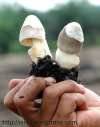 Some time ago I visited one of the oil palm plantation in Palembang. Area of palm oil palm plantations is not too large, approximately 8000 ha (core plantation) and 40,000 ha (plasma). Fresh fruit bunches (FFB) harvested from the plantation is then processed in the palm oil mill near at one end of the garden. Factory processing capacity currently approximately 50 tons of FFB / hour. From the processing of FFB produced CPO (crude palm oil), waste OPEFB (oil palm empty bunches), and liquid waste. OPEFB waste volume large enough, in one day can reach 150 tons.






 Berbagi Tak Pernah Rugi