Isroi
SUMMARY
To prevent serious global warming by emission of carbon dioxide from fossil fuels, it is an urgent task to produce energy and chemicals from renewable resources. The development of conversion systems from lignocellulosic biomass into fuels and other chemicals has received much attention due to immense potentials for the utilization of biomass waste. Since lignin makes the access of cellulolytic enzymes to cellulose difficult, it is necessary to decompose the lignin barrier prior to the enzymatic hydrolysis. Thus, effective pretreatments are needed for enzymatic saccharification and ethanol production from lignocellulose. Biologycal pretreatment employs microorganisms and their enzymes to breakdown lignin barrier present in lignocellulosic biomass. The most promising microorganisms for biological pretreatment are white-rot fungi, that produce ligninolytic enzymes and mineralize lignin into CO2 and H2O in pure culture. Biological pretreatment has several potential advantages over conventional physical/chemical pretreatments, such as: greather substrate and reaction specificity, lower energy requirements, lower pollution generation, higher yields of desired products, opportunities for transformations not feasible with chemical reagnets. However, biological pretreatments is need more time, more space, and loss of polysaccharides. Biological pretreatment by white-rot fungi have done mostly in solid-state fermentation (SSF). Enzyme production and activities by white-rot fungi in SSF are influenced by several factors, ie: fungal strain, nutrient content, nitrogen content, addition of trace element, moisture content, aeration, time incubation, pH, and temperature. Manipulation of these fermentation conditions could enhance enzyme production and activities. To this end, biological pretreatments with lignin-degrading fungi possess a great potential if the fungal treatment could decompose the network of lignin with minimum loss of polysaccharides and short time for incubation. Biological pretreatment of lignocellulosic biomass by white-rot fungi can be biotechnologically exploited for several application, i.e.: enzymatic hydrolysis, biopulping, biobleaching, animal feed, enzymes production, and others.

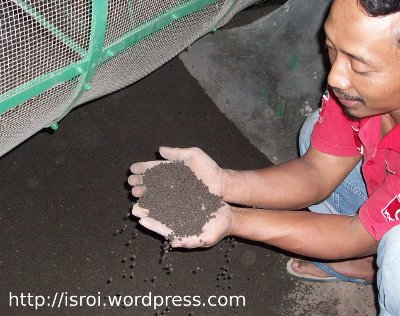
 Efisiensi pengeringan yang saya maksud di sini adalah banyaknya POG kering yang diproduksi berdasarkan biaya yang dibutuhkan. Biaya di sini adalah biaya bahan bakar/energi. Misalkan saja biaya pengeringannya Rp. 100/kg. Andaikan saja kita bisa mengurangi biaya ini menjadi Rp. 80/kg atau bahkan bisa Rp. 50/kg, berarti efisiensi pengeringannya meningkat.




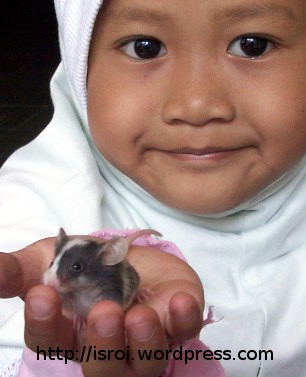
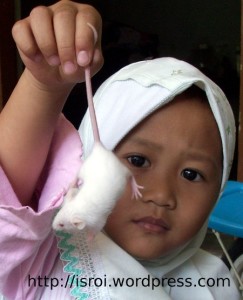 Usaha ternak tikus sedang naik daun setahun terakhir. Apalagi setelah majalah Trubus mengangkatnya sebagai topik utama bulan Agustus 2009 yang lalu. Kemudian ikuti dengan liputan ternak tikus oleh stasion televisi.






 Berbagi Tak Pernah Rugi